


When Should You Replace a Drinking Fountain Instead of Repairing It?
A practical framework for facility managers, school administrators, and building owners to make the right long-term decision: repair or replace.
Your commercial drinking fountain has stopped working, and now you're faced with a decision that every facility manager, maintenance supervisor, school administrator, and building owner eventually has to make. Should you repair the existing fountain, or is it time to replace it? The best decision comes from looking at the fountain as a whole, not just the problem you're dealing with today.
Lifespan & Durability
How Long Should a Commercial Drinking Fountain Last?
It's not uncommon to find commercial drinking fountains that have been serving schools, office buildings, parks, and public facilities for 20 years or more. Unlike consumer appliances that are often replaced after a decade, commercial fountains are designed to be repaired when components wear out. That doesn't mean every fountain should stay in service indefinitely, but age alone isn't a reliable indicator of when replacement is necessary.
How the Fountain Is Used
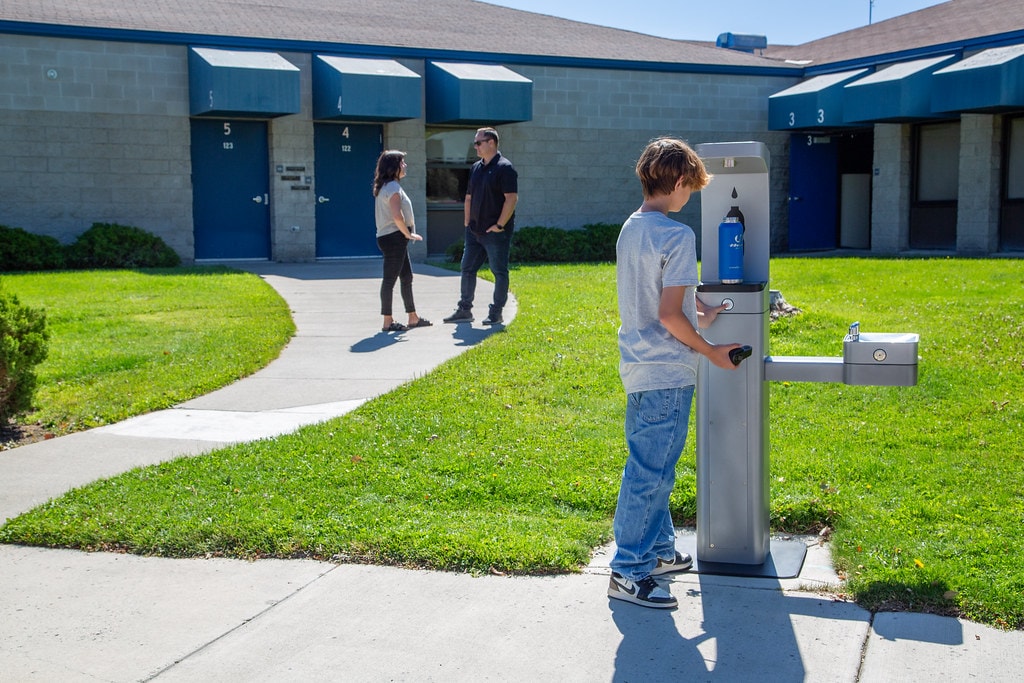
A fountain in a small office break room experiences very different wear than one installed in a busy middle school hallway. Higher usage naturally increases wear on moving parts like push bars, valves, sensors, and bubblers, but it doesn't necessarily shorten the life of the fountain itself.
Installation Environment
Indoor fountains are generally protected from weather and temperature extremes. Outdoor units face constant exposure to rain, snow, dirt, sunlight, and in colder climates, freezing temperatures. They typically require more maintenance over their lifetime than comparable indoor models.
Routine Maintenance
Replacing water filters on schedule, inspecting plumbing connections, cleaning strainers, and addressing small problems before they become major repairs can significantly extend the useful life of the equipment. Many service calls begin as minor issues that were ignored until they became larger problems.
Water Quality
Hard water can leave mineral deposits inside valves, bubblers, and regulators, affecting water flow and spray patterns. Areas with particularly hard water often require more frequent cleaning and maintenance, but these are usually routine maintenance issues rather than signs the fountain needs to be replaced.
A well-maintained commercial drinking fountain can often remain in service for decades. Instead of focusing on its age, evaluate its condition, repair history, and overall reliability.
Troubleshooting
Start by Identifying the Actual Problem
When a drinking fountain stops working properly, it's easy to assume the worst. However, many of the most common service calls involve problems that are relatively inexpensive to fix. Before comparing repair costs with replacement costs, determine exactly what's causing the issue.
Common Symptoms
- Water won't shut off
- Weak or uneven water stream
- Water isn't cooling properly
- Broken push button or push bar
- Leaking around the basin
- Poor tasting water
- Sensor won't activate
- Excessive compressor noise
- No water flow
While those symptoms may sound serious, they don't all point to major repairs. Poor water quality may simply mean it's time to replace the filter. A weak stream might be caused by mineral buildup or a worn regulator. Diagnosing the actual cause before making a purchasing decision can save both time and money.
Repair Guidance
Repairs That Are Usually Worth Making
Many repairs are simply part of normal ownership. Just as you expect to replace brake pads on a vehicle or filters in an HVAC system, commercial drinking fountains have components that naturally wear with use. Replacing these parts doesn't necessarily indicate that the entire fountain needs to be replaced.
Bubblers
The bubbler is one of the most commonly replaced components on any drinking fountain. Years of daily use, mineral buildup, accidental damage, or vandalism can affect the spray pattern or physical condition of the bubbler. Replacing it is typically a straightforward repair that restores proper operation without affecting the rest of the fountain.
Push Buttons and Activation Components
Mechanical push buttons and push bars experience thousands of uses throughout their lifetime. Over time, they can become loose, difficult to operate, or fail to activate the water properly. These are considered normal wear items and can usually be replaced without extensive repairs. On sensor-operated units, a malfunctioning sensor also doesn't necessarily mean the entire fountain has reached the end of its service life.
Valves, Regulators, and Internal Components
Many operational issues can be traced back to relatively small internal components. Solenoid valves control water flow, while regulators help maintain the proper spray height and pressure. As these parts wear over time, you may notice inconsistent water flow, weak streams, or water continuing to run after activation. These components are designed to be serviced, and replacing them is often much more economical than replacing the entire fountain.
Filters and Routine Maintenance Items
If your drinking fountain includes filtration, declining performance doesn't necessarily indicate a mechanical failure. An overdue filter can reduce water flow, affect taste, and make it seem like something is wrong when routine maintenance is all that's required. Cleaning strainers, replacing seals, or tightening plumbing connections are all common maintenance tasks that can restore normal operation.
Routine wear items like bubblers, valves, filters, regulators, and activation components are expected to be replaced over the life of the fountain. The key is resisting the temptation to assume that every repair means the equipment has reached the end of its useful life.
Bigger Decisions
Major Repairs That Deserve a Closer Look
Some repairs involve major mechanical or electrical components that require more labor, specialized parts, or a larger financial investment. That doesn't automatically mean the fountain should be replaced, but these are the situations where it's worth taking a step back before approving another repair. The better question is whether repairing it is still the best long-term investment.
Compressor Failures
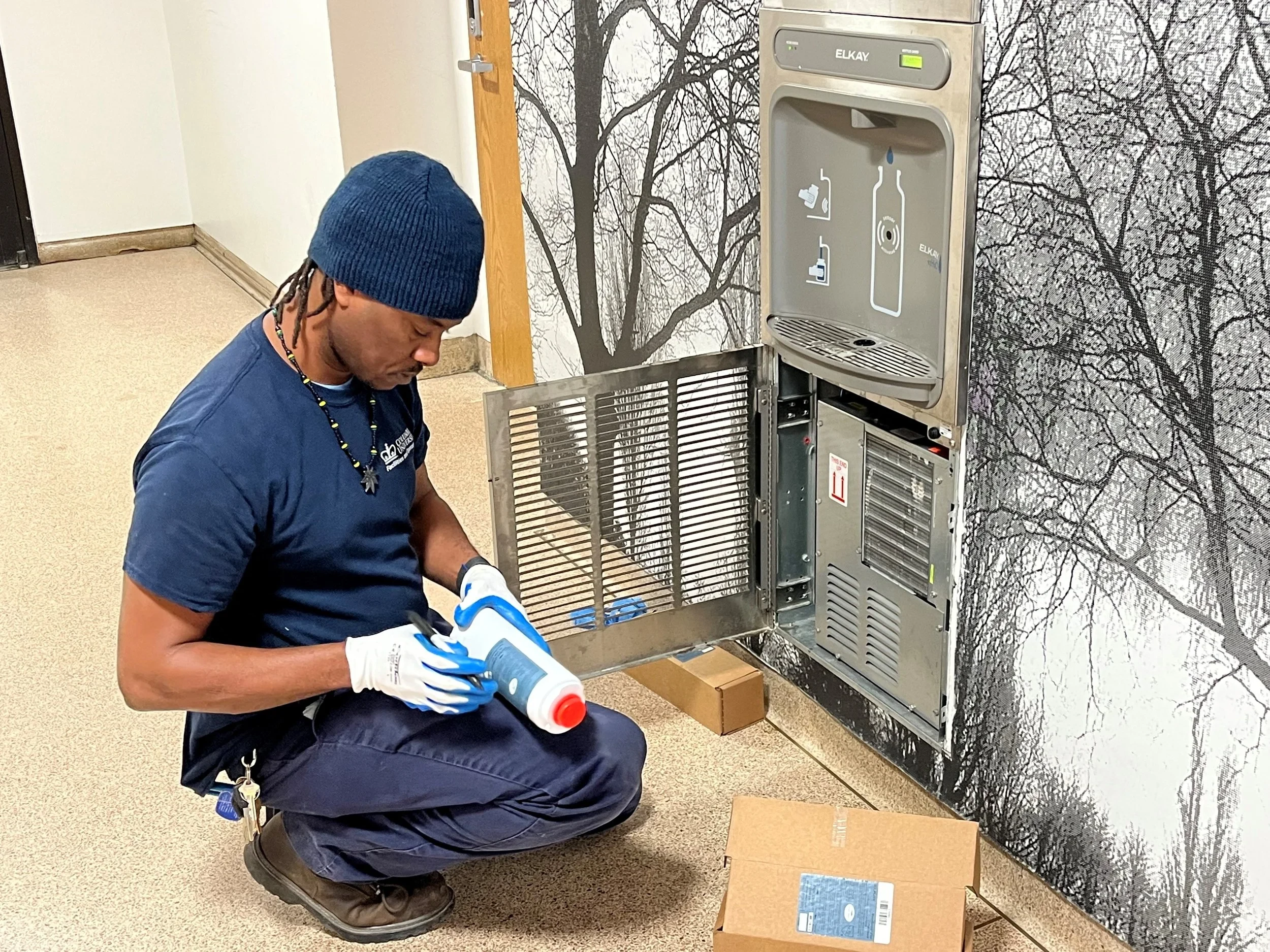
If you have a refrigerated drinking fountain, the compressor is one of the most important components in the system. Signs of compressor-related problems include water that no longer cools properly, the compressor running continuously, loud humming or vibrating noises, frequent cycling on and off, or complete refrigeration failure. If the fountain has otherwise been reliable and replacement parts are readily available, repairing the refrigeration system may still be the better investment. On the other hand, if this is only the latest in a series of major repairs, it may be time to look at the bigger picture.
Electronic Components
Many newer drinking fountains and bottle filling stations include electronic features such as touch-free sensors, digital filter monitors, bottle counters, and electronic control boards. While these systems are generally reliable, electronic components can eventually fail. Before replacing the entire fountain, verify whether the failed part is available. In many cases, replacing a sensor or control board is far less expensive than replacing the entire unit.
Structural Damage
Mechanical parts are designed to be repaired. Structural damage is another matter. If the fountain has suffered severe corrosion, freeze damage, vandalism, a cracked basin, or damage to the cabinet itself, repairing the internal components may not solve the larger problem. Minor scratches and cosmetic wear are expected on commercial equipment and usually aren't reasons to replace a fountain, but damage that affects structural integrity may make replacement the more practical long-term solution.
Questions to Ask Before Approving a Major Repair
- Has this fountain been reliable?
- Is this the first significant repair?
- Have multiple components failed recently?
- Does the fountain still perform well overall?
- Does it still meet the needs of the building?
A fountain that has provided fifteen years of dependable service before needing its first major repair deserves a different evaluation than one that's required multiple service calls over the last two years.
Replacement Signals
When Is It Time to Replace a Drinking Fountain?
There's rarely one repair that automatically means a fountain should be replaced. Replacement becomes easier to justify when several factors begin pointing in the same direction.
The Fountain Requires Frequent Repairs
Every commercial drinking fountain requires maintenance. What's not normal is repeatedly repairing different problems on the same fountain. If you're calling for service every few months, replacing multiple components each year, or dealing with recurring issues that never seem fully resolved, it may be time to consider replacement. Repeated downtime doesn't just increase maintenance costs. It also creates inconvenience for the employees, students, customers, and visitors who rely on the fountain every day.
Several Major Components Have Already Been Replaced
One major repair isn't necessarily a concern. Several major repairs within a relatively short period tell a different story. If you've already replaced the compressor, repaired the refrigeration system, installed a new sensor, and replaced multiple plumbing components, it's worth asking whether continuing to invest in the existing fountain still makes sense. Looking at the overall repair history is often more useful than focusing on the current repair alone.
Replacement Parts Are No Longer Available
Sometimes the decision is made for you. If the part needed to repair the fountain has been discontinued and no compatible replacement exists, replacement may become the only practical solution. Before assuming this is the case, verify the model number and confirm part availability. Many commercial drinking fountains remain repairable much longer than people expect because manufacturers continue offering replacement parts for years after a model has been discontinued.
The Fountain No Longer Meets Your Building's Needs
Sometimes there isn't anything seriously wrong with the fountain. The building has simply changed. Perhaps employees now carry reusable water bottles. Maybe the school wants bottle filling stations instead of traditional fountains. Or perhaps accessibility improvements are already planned as part of a renovation. If you're already facing a significant repair, it may make more sense to invest in equipment that better serves your building for the next twenty years rather than simply restoring what you already have.
Downtime Is Becoming More Expensive Than the Repair
The repair bill isn't always the biggest expense. Every time a fountain is taken out of service, someone has to diagnose the problem, order parts, schedule repairs, and wait for the unit to return to operation. In facilities where drinking fountains receive heavy daily use, repeated downtime can become more frustrating than the repair costs themselves. Reliable equipment has real value, especially in schools, healthcare facilities, recreation centers, airports, and other high-traffic buildings where drinking water is expected to be available throughout the day.
Avoid These Pitfalls
Common Mistakes to Avoid
Deciding whether to repair or replace a drinking fountain isn't always straightforward. Fortunately, most costly mistakes are avoidable.
Replacing the Fountain Without Diagnosing the Problem
It's understandable to assume the worst when a fountain stops working. However, many problems turn out to be relatively minor repairs. Before approving a replacement, identify exactly what failed. A worn valve, clogged regulator, broken push button, or overdue filter shouldn't automatically lead to replacing the entire fountain.
Assuming an Older Fountain Isn't Worth Repairing
Age alone doesn't determine whether a drinking fountain should be replaced. We've seen older fountains continue operating reliably after relatively simple repairs, while newer units sometimes require extensive work because of vandalism, poor maintenance, or environmental damage. The overall condition of the fountain is far more important than the year it was installed.
Looking Only at the Current Repair Bill
A repair estimate tells only part of the story. Instead of asking, 'How much does this repair cost?', ask a different question: 'If I approve this repair today, how likely is this fountain to provide several more years of dependable service?' That shift in thinking often leads to a much better decision.
Forgetting About Future Needs
Even if a fountain can be repaired, consider whether it's still the right fountain for your building. Would occupants benefit from bottle filling stations? Would filtered water improve the user experience? Is touch-free operation becoming a priority? If the answer is yes, replacement may provide benefits that extend well beyond fixing today's problem.
Upgrade Options
Upgrade Opportunities to Consider
If you've decided that replacing your drinking fountain is the best long-term option, don't automatically assume you need to purchase the same type of unit you have today. A replacement project is a good opportunity to evaluate whether your building's needs have changed since the original fountain was installed.
Bottle Filling Stations
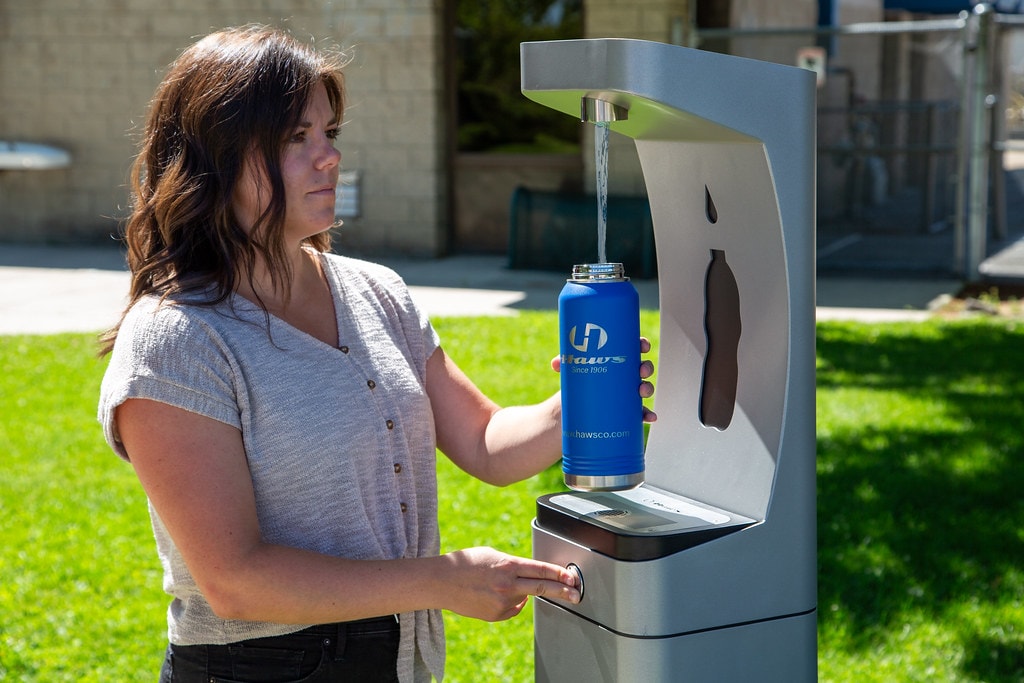
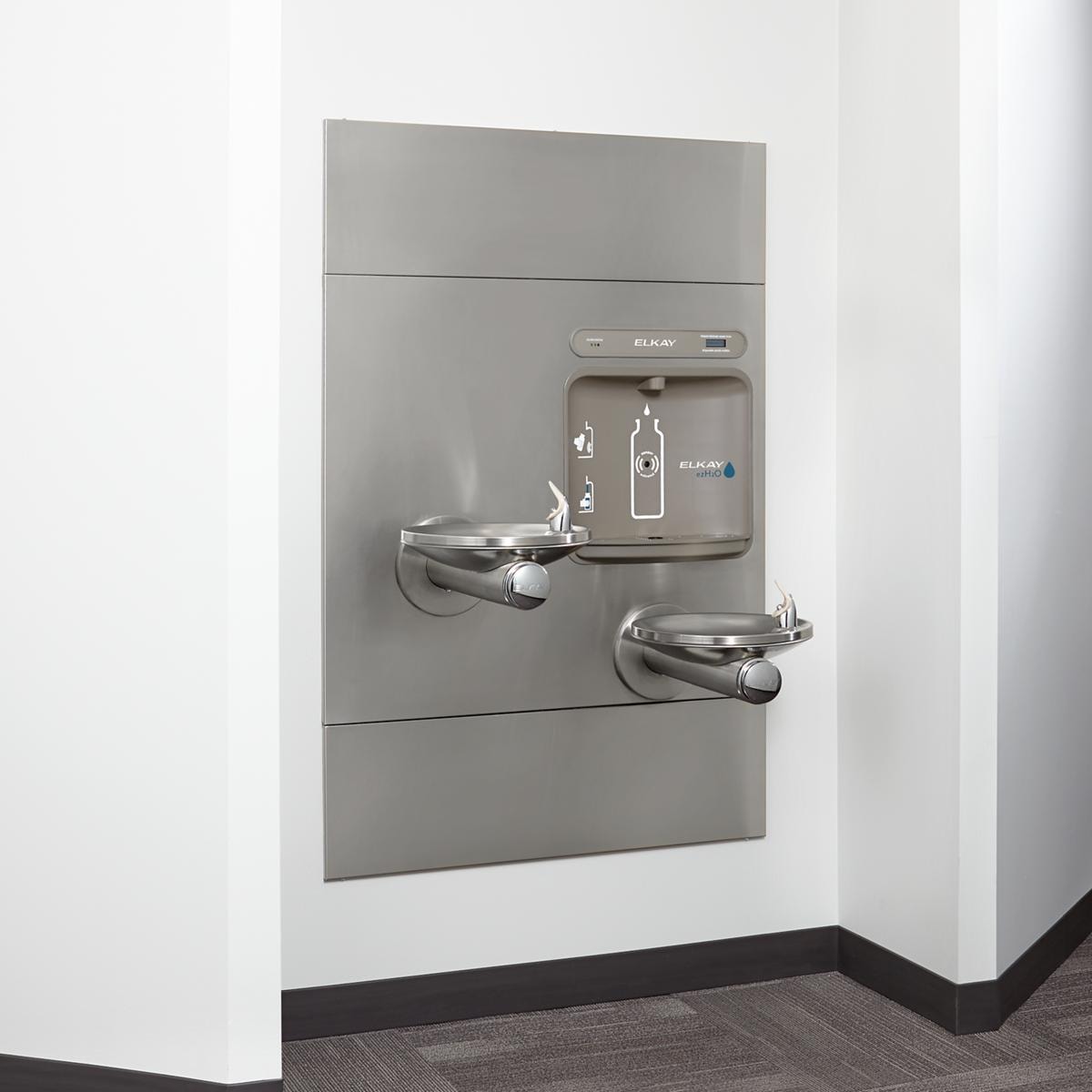
One of the biggest changes in commercial drinking water equipment has been the growing popularity of bottle filling stations. Whether it's students carrying reusable water bottles, employees staying hydrated throughout the workday, or visitors looking for a quick refill, bottle fillers have become an expected feature in many public buildings. For many schools, universities, gyms, airports, and office buildings, upgrading to a bottle filler is one of the most noticeable improvements you can make.
Can You Retrofit Your Existing Fountain?
Depending on the manufacturer and model, you may not need to replace the entire drinking fountain to add bottle filling capability. Some fountains are compatible with manufacturer-approved retrofit bottle filler kits that install above the existing unit. A retrofit can be an excellent option if your current fountain is still in good condition but no longer meets the needs of your building. Before planning a retrofit, verify that your existing fountain is compatible with the appropriate upgrade kit.
Filtered Drinking Water
If your current fountain doesn't include filtration, replacement may be a good opportunity to add it. Integrated filtration can improve water taste and reduce common contaminants, depending on your local water supply. While filters require periodic replacement, many facility managers find that providing filtered drinking water improves user satisfaction and encourages greater use of the fountain.
Touch-Free Operation
Touch-free bottle filling stations and drinking fountains have become increasingly common in commercial buildings. Sensor-activated operation reduces contact with shared surfaces while making it easier to refill bottles quickly. Although touch-free operation isn't necessary for every installation, it's worth considering if you're already replacing an older fountain.
Choosing the Right Replacement
If replacement is the right decision, spend a few minutes thinking about how the new fountain will be used over the next 15 to 20 years rather than simply replacing what was there before.
- How many people will use the fountain each day?
- Do building occupants regularly carry reusable water bottles?
- Is refrigerated water important?
- Would a filtered model provide additional value?
- Will the fountain be installed indoors or outdoors?
- Are vandal-resistant features necessary?
- Does the installation need to meet ADA accessibility requirements?
Common Questions
Frequently Asked Questions
Final Thoughts
Deciding whether to repair or replace a commercial drinking fountain isn't always a straightforward decision, and there's no universal rule that applies to every situation.
Some fountains continue providing dependable service for decades with nothing more than routine maintenance and the occasional replacement part. Others eventually reach a point where recurring repairs, discontinued components, or changing building needs make replacement the smarter long-term investment.
The key is looking beyond the immediate repair. Consider the fountain's overall condition, its maintenance history, the availability of replacement parts, and whether it still serves the needs of your facility. Taking a few extra minutes to evaluate those factors can help you avoid unnecessary expenses while ensuring your building continues to provide reliable drinking water for years to come.
If the repair is relatively minor and the fountain has otherwise been dependable, fixing it is often the right decision. If maintenance has become frequent, major components are beginning to fail, or you're looking to upgrade to features like bottle filling stations, filtered water, or touch-free operation, investing in a new fountain may provide greater value over the long run.
Ultimately, the goal isn't simply to repair the current problem. It's to make the decision that best supports your building, your budget, and the people who rely on that drinking fountain every day.
Have Questions About Your Drinking Fountain?
Our team at Category Five Technologies has helped schools, healthcare facilities, airports, and commercial buildings evaluate, repair, and upgrade their drinking water equipment for over two decades. We're happy to help you think through the right decision for your facility.