


Category Five Technologies
Category Five Insights
Back to School Issue
Practical ideas, industry trends, and smarter facility solutions for facility managers, maintenance directors, school administrators, and building professionals.
August
2026
Issue #2
Welcome to Issue #2
August 2026 — Back to School Issue. This issue focuses on hydration access for K-12 schools: evaluating where students need water, deciding when to retrofit versus replace, planning for maintenance, and ensuring accessibility before equipment is ordered.
This Month's Insight
Back to School: 4 Ways to Improve Hydration Access Across Your School
As students return to classrooms, schools are reviewing everything from technology and classroom equipment to building maintenance and safety. Hydration equipment deserves a place on that list.
Many schools still rely on drinking fountains that were installed long before reusable water bottles became part of the everyday school routine. Those fountains may still work, but they may not provide the convenience, capacity, or bottle-filling access today's students and staff expect.
The good news is that improving hydration access doesn't necessarily mean replacing every drinking fountain in the building. For K-12 administrators planning upgrades, here are four areas worth evaluating.
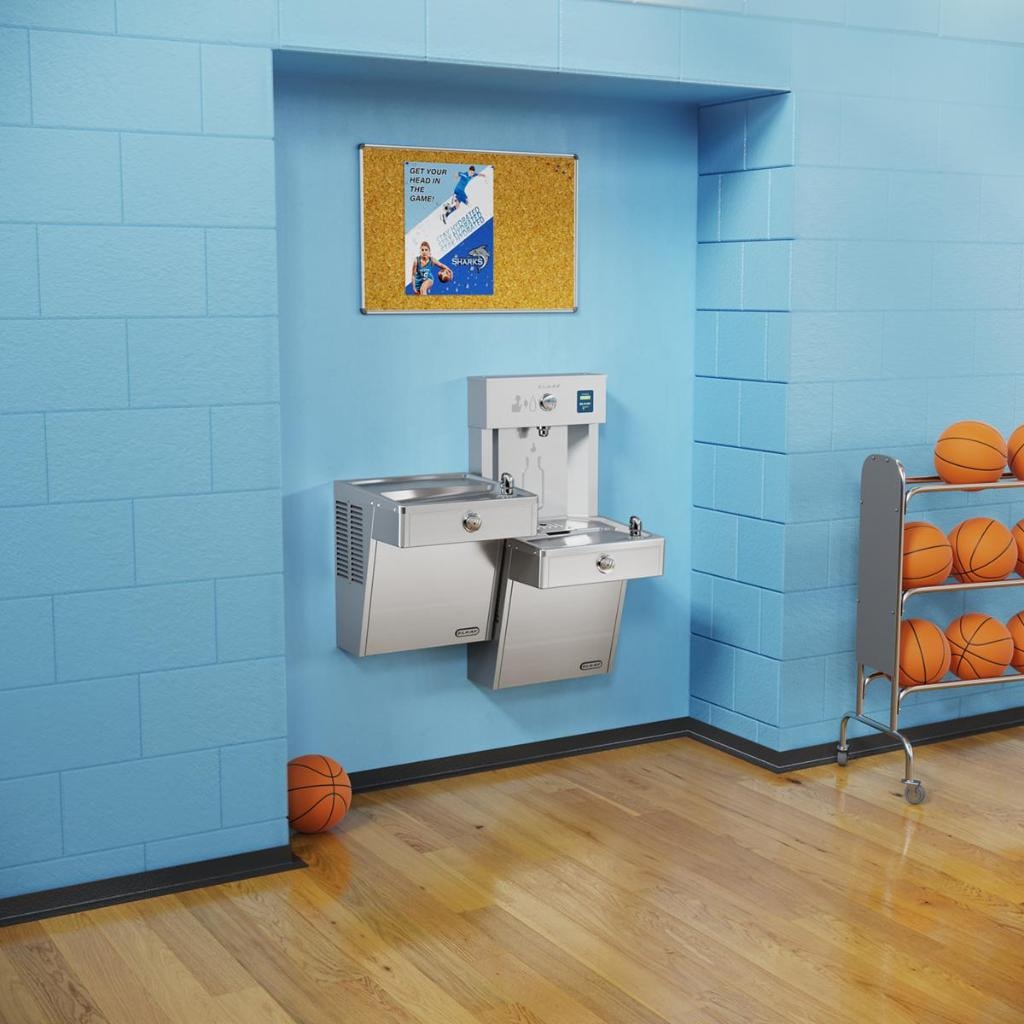
1. Look at Where Students Actually Need Water
Start with student traffic, not individual products. Walk through the building during arrival, lunch, class changes, athletic activities, and dismissal. Which fountains get the most use? Where do students tend to form lines? Are there parts of the school where convenient drinking water simply isn't available?
High-priority areas often include:
- Main corridors and classroom wings
- Cafeterias
- Gymnasiums
- Athletic fields and sports complexes
- Playgrounds and outdoor recreation areas
- Entrances and common spaces
The right solution may be different in each location. A busy hallway may benefit from a bottle filling station that allows students to refill quickly between classes, while an outdoor athletic area may require equipment designed specifically for weather exposure and heavy use.
Pro Tip: Don't evaluate hydration equipment only when the hallways are empty. A quick walkthrough during a class change can tell you much more about where additional capacity is actually needed.
2. Decide Where to Retrofit and Where to Replace
Adding bottle filling capability doesn't always require replacing an entire drinking fountain. Depending on the manufacturer, model, age, and configuration of your existing equipment, a compatible retrofit bottle filler may allow you to modernize an existing fountain while keeping the base unit in service.
That can be a practical option when the existing fountain is still in good condition. A full replacement may make more sense when equipment is aging, requires frequent repairs, no longer meets the needs of the building, or when the school wants a different configuration, filtration, refrigeration, or bottle filling capability.
The important thing is to verify compatibility before ordering.
A common mistake: Assuming bottle filler retrofit kits are universal. They aren't. Record the manufacturer and model number of the existing fountain before selecting a retrofit.
3. Think About Maintenance Before You Buy
Schools can put hydration equipment through a lot of use. That's why purchase price shouldn't be the only consideration when comparing drinking fountains and bottle filling stations. Before choosing equipment, ask:
- Does the location need filtered water?
- How frequently will filters need to be replaced?
- Is refrigerated water necessary?
- How much daily traffic will the unit receive?
- Is touch-free bottle filling important?
- How easily can maintenance staff access serviceable components?
- Are replacement parts and filters readily available?
- Is the equipment appropriate for the location where it will be installed?
A fountain that is inexpensive to purchase isn't necessarily inexpensive to own.
Pro Tip: Before replacing equipment across an entire district, consider whether reducing the number of different models and filter types your maintenance department has to support could make long-term upkeep easier.
4. Include Accessibility in the Planning Stage
Accessibility should be considered before equipment is ordered, not after installation begins. Drinking fountain accessibility can involve more than selecting a product identified as ADA compliant. Mounting height, clear floor space, knee and toe clearance, protrusion from the wall, approach, and the overall installation can all matter.
That is especially important when replacing older fountains or changing the configuration of an existing hydration area. Always review the manufacturer's installation requirements along with applicable accessibility and local building requirements for the project.
Pro Tip: A compliant product does not automatically create a compliant installation. Look at the entire hydration area, including how users approach and access the equipment.
The Goal: Make Hydration Easy
The best hydration station is one students barely have to think about. It should be conveniently located, easy to use between classes, appropriate for the amount of traffic it receives, and straightforward for maintenance teams to service.
For schools planning improvements, you don't necessarily need to start with a major renovation. Start with an inventory. Document what equipment you already have, where it's located, which stations receive the most use, and where students could benefit from better access. From there, it becomes much easier to determine where a retrofit, replacement fountain, bottle filling station, or additional hydration point makes the most sense.
Need help comparing options?
Shop School Drinking Fountains at ProDrinkingFountains.comFeatured Resource
Don't Forget About Hydration Outside the School
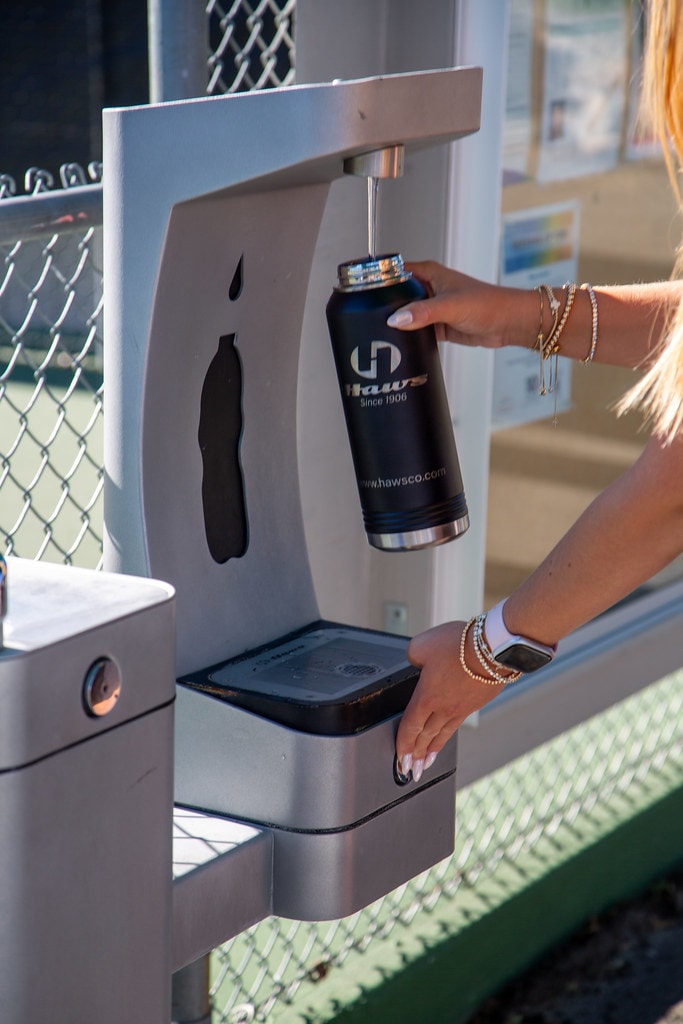
Hallways and cafeterias aren't the only places students need access to drinking water. Athletic fields, playgrounds, tennis courts, outdoor common areas, and sports facilities create an entirely different set of challenges.
Unlike indoor equipment, an outdoor drinking fountain may need to withstand changing temperatures, rain, direct sunlight, irrigation, heavy use, accidental impacts, and potential vandalism. Schools planning an outdoor installation should consider factors such as:
- Expected student and athletic traffic
- Bottle filling capability
- ADA accessibility
- Construction materials and durability
- Vandal-resistant features
- Water supply and drainage
- Local climate and freeze protection
- Long-term maintenance and serviceability
Our new Commercial Outdoor Drinking Fountain Guide takes a deeper look at these decisions and explains how to choose equipment based on where and how it will actually be used.
Planning an outdoor hydration project?
Read the Commercial Outdoor Drinking Fountain Guide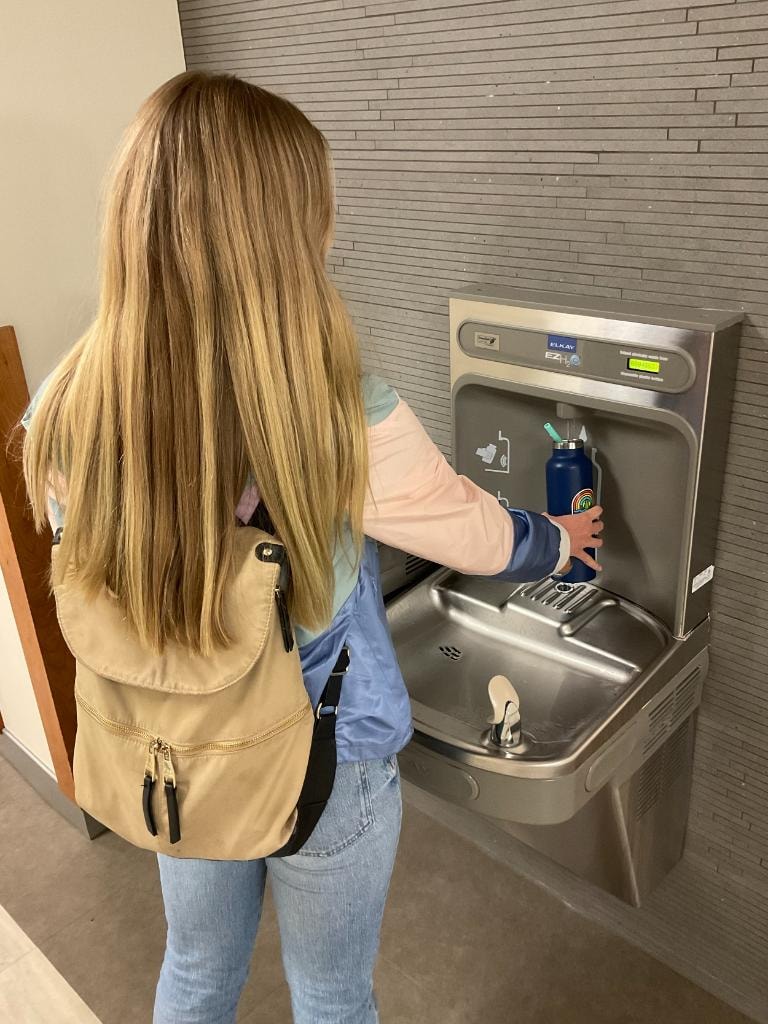
Product Spotlight
Elkay LZS8WSLP ezH2O Bottle Filling Station
A Practical Hydration Upgrade for Busy School Hallways
For schools looking to combine a traditional drinking fountain with modern bottle filling, the Elkay LZS8WSLP is a strong option for high-use indoor locations. It combines a refrigerated drinking fountain and bottle filling station into a single wall-mounted unit. Students can take a drink from the bubbler or use the sensor-activated bottle filler to refill a reusable water bottle without touching the unit.
- WaterSentry filtration system for filtered water from both fountain and bottle filler
- 8.0 GPH chilling capacity for refrigerated drinking water
- Sensor-activated hands-free bottle filling
- 1.1 GPM fill rate for fast refills during short passing periods
- Built-in filter status lights and FillSafe filter reset system
- Green Ticker counter displays 20 oz. plastic bottles potentially saved
As with any school hydration project, confirm plumbing, electrical, mounting, accessibility, and installation requirements for the specific location before ordering.
View the Elkay LZS8WSLP at ProDrinkingFountains.comDid You Know?
Retrofit bottle fillers exist for some drinking fountain models, but compatibility is model-specific. A retrofit kit designed for one manufacturer's fountain may not fit another, and not every fountain model has a compatible retrofit available. Before ordering a retrofit, confirm the manufacturer and model number of the existing fountain and verify that a compatible bottle filler kit is available for that specific unit.
Quick Facility Tip
Before the school year begins, build a simple hydration equipment inventory for your building. For each unit, record:
- Location
- Manufacturer and model number
- Whether it has a bottle filler
- Filter type and last replacement date
- Whether it is refrigerated
- ADA configuration
- Any known service issues
Having this information on hand makes it much easier to order the right filters, identify units due for replacement, and plan future upgrades without starting from scratch each time.
Project Spotlight
McLean School, Potomac, MD
School
McLean School
Location
Potomac, MD
Unit
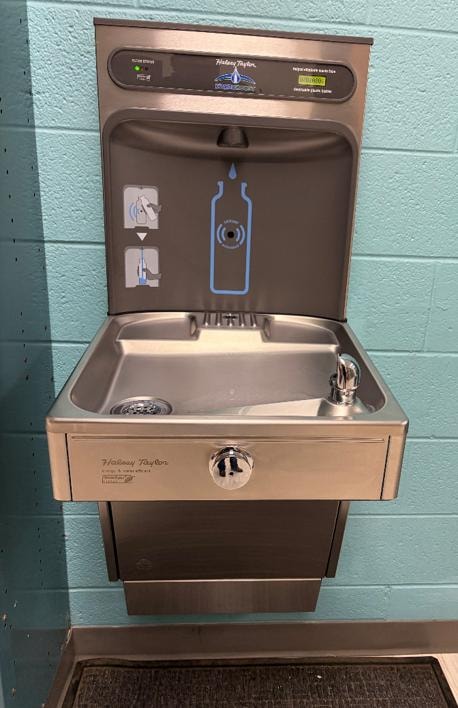
Halsey Taylor HTHB-HVRGRN8-WF
Type
Bottle Filling Station
McLean School in Potomac, Maryland selected the Halsey Taylor HTHB-HVRGRN8-WF bottle filling station for their hydration upgrade. The unit combines a traditional drinking fountain with a sensor-activated bottle filler, providing students with a fast, touch-free way to refill reusable water bottles throughout the school day.
If your school or facility completed a hydration or restroom project this year, we would love to feature it in a future issue.
Meet the Team
Featured Employee

Warehouse and Operations
Aaron
As our warehouse manager, Aaron has been a vital part of Category Five for more than 10 years. He keeps our warehouse running smoothly, handling everything from incoming and outgoing shipments to inventory and day-to-day operations. Aaron also assists with order fulfillment and helps resolve customer delivery issues. Outside of work, he enjoys trying new restaurants and exploring different cities with his wife, as well as playing softball with friends.
Spotlight Reviews
What Our Customers Are Saying
"Always have a pleasant experience ordering from ProDryers"
Rex E.
Review provided after order fulfillment
"Easy transaction and quick shipping."
Stephanie S.
Review provided after order fulfillment
"product came in a timely manner and am very happy with them"
Greg R.
Review provided after order fulfillment
Coming Next Month
September 2026 — Buying Smarter for Your Facility
The lowest purchase price doesn't always mean the lowest long-term cost. Next month, we'll look at what facility buyers should consider beyond the price tag, including durability, maintenance, replacement parts, energy use, warranties, and choosing equipment that's actually built for the demands of your facility.
Category Five Insights publishes monthly. Subscribe below to receive the next issue directly in your inbox.
Stay in the Loop
Get Insights in Your Inbox
Join facility managers, maintenance directors, and building professionals who receive Category Five Insights. No spam, just practical content relevant to your work.